How Silent Film Intertitles Shape Story and Suspense
Silent film intertitles carried dialogue and story facts; learn how wording and placement guide attention, shape suspense, and clarify what a scene means.
The most common mistake in watching silent films is treating each intertitle as a pause between the “real” images. That overlooks how silent film intertitles carry dialogue and story facts while shaping pace: a card can clarify a glance, redirect attention, or change the meaning of the next image.
An intertitle is a written insert within a film, not simply a caption added to speech. Filmmakers used cards alongside faces, movement, and props, balancing what viewers could infer from action against what needed to be stated in words.
Words Between Images
A silent film could tell much of its story through faces, movement, props, and the arrangement of people in a scene. An intertitle supplied language those elements could not convey economically: a spoken line, a letter’s contents, a change of place, or a fact needed before the action continued.
Two common functions are dialogue titles and expository titles. A dialogue title presents words attributed to a character; an expository title provides information or context. The distinction is not always sharp: “The train leaves at dawn” might sound like dialogue if assigned to a character, or function as exposition if presented without a speaker.
Design helped viewers recognize what kind of information a card offered. It might identify a speaker, show a message as written text, or present narration in a distinct style. Lettering, framing, and wording all contributed to that signal, though conventions varied among films and production traditions.
Placement Shapes Flow
A card’s position mattered because viewers had to shift from reading back to watching. A title shown before an action could prepare viewers to interpret it; shown afterward, it could name what had just happened. Placed between two gestures, it could seem to belong to the exchange.
Consider a character who opens a small envelope and looks toward a waiting companion. If the film inserts the letter’s message before the character reacts, viewers read the following expression as a response to that information. If the message appears after the reaction, they may first wonder what the character has understood. The images can be identical while their order changes the experience.
Placement also affected rhythm. A card that arrives too early may explain a moment before viewers notice its clues. One that arrives late can make an action confusing or turn a clear gesture into an unanswered question. The aim is not to minimize cards, but to give each image enough room to register.
Dialogue and Inference
Dialogue titles could preserve a character’s voice, but they also competed with performance. A line of text tells viewers what was said; a look, posture, or movement may show how it was said. Strong storytelling lets those channels work together instead of having a title explain every emotion already visible.
A brief “You came back” followed by an uncertain smile leaves room for the face to complicate the words. A longer title spelling out the character’s relief, surprise, and fear could flatten the performance by doing its interpretive work for viewers.
Titles could also shape what viewers know about a conversation. A card might disclose a threat before another character learns of it, creating suspense. Or it might withhold a key sentence until after a reaction, prompting viewers to revise their first reading of the scene.
What Does a Title Tell You?
How are dialogue titles different from intertitles?
“Intertitle” is the broad term for a written card inserted into a film, including cards that present dialogue. “Dialogue title” describes a card’s specific function: representing words spoken by a character.
Why not put all the dialogue on screen?
Every card takes viewing time and interrupts the continuous image, so including every line can slow a scene without adding useful information. Filmmakers could retain essential words and let expression, gesture, and action carry the rest.
How could viewers tell who was speaking?
A title could name a speaker or use a recognizable layout, while the surrounding shot showed whose turn it was. The image before or after the card often supplied context, so a character label was not needed on every line.
Did music replace the work of intertitles?
Accompaniment could shape mood and pace, but it could not state a character’s exact sentence or reveal the contents of a letter. Intertitles supplied language and information; music and image contributed different kinds of meaning.
Reading an Insert
When watching a silent film, notice what appears immediately before and after a title. Ask whether the card gives information, records speech, or changes how an earlier image should be understood. Then watch for the first gesture or object that responds to it.
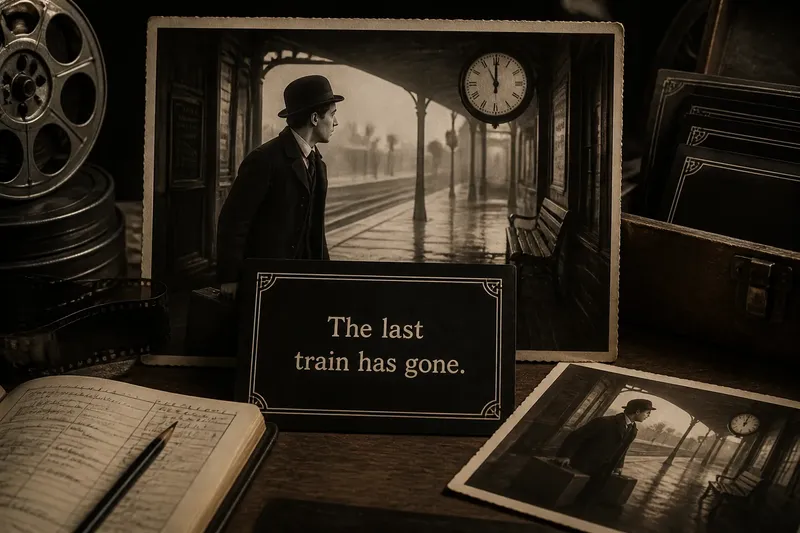
Imagine a scene with a traveler, a suitcase, and a station clock. The traveler sets down the suitcase and looks at the clock; the starting information is that the platform appears empty, but the reason is not yet known. First, an expository card reads, “The last train has gone.” Next, the traveler turns toward the platform. The resulting answer is clear: the turn responds to a known fact, rather than reading first as a search. If the card instead appears after the turn, the viewer sees the search before learning why the platform is empty; that order trades immediate clarity for a brief question.
This close viewing separates a title’s content from its timing. A card may be factually clear yet dramatically poorly placed, or spare in wording yet carefully positioned to let a reaction unfold. Ask not only what the words say, but what the film lets viewers see before they read them.
Economy and Emphasis
Intertitles could guide attention without describing every visible detail. If a character holds a photograph, the image already shows the object; a title might identify the person pictured, reveal why the photograph matters, or leave that meaning open. Each choice directs attention toward a different part of the scene.
Text could also create a contrast between public speech and private thought. A character might appear composed while a title gives viewers access to a written message or an inward response. Because the card interrupts the image, this access has a distinct force: viewers are briefly invited to read what the character cannot, or will not, say aloud.
Silent film intertitles were neither a failed substitute for recorded dialogue nor a mere technical convenience. Their words and placement formed a screen language of their own, working alongside faces, movement, staging, and accompaniment. To follow their contribution, watch for the moment a card changes what an image means—and for the image that gains meaning because the card has just disappeared.
Silent film intertitles are easiest to appreciate when reading becomes part of watching rather than a pause from it. As you follow a card’s wording and placement, notice the first reaction it prompts; that response is often where the story continues.